Category Archives: turkey

Capital Fraud in Turkey? Evidence from Citizen Initiatives

The troubles and irregularities in Ankara’s mayoral election keep piling up.

A recent article in McClathyDC has many interesting points. It notes that around a quarter of all ballot boxes arrived at counting centers without an official stamp from the election board:

The unstamped ballot box tallies alone raise serious questions about the outcome. The summaries represented more than 713,000 votes – nearly a quarter of the 3.3 million votes cast, the CHP said. Incumbent Mayor Melih Gokcek, a stalwart in Erdogan’s Justice and Development Party, or AKP, defeated CHP candidate Mansur Yavas by about 31,000 votes.

The case of the missing stamps are not isolated events:

Tally sheets that lacked the official stamp were a major irregularity. Other means were more subtle. An example was the redistricting decided by the AKP-ruled Parliament in a late-night vote in 2012, which moved conservative rural municipalities into CHP-leaning districts in the city of Ankara for the mayoral election. The CHP also charged there had been at least 53,000 duplicate registrations; that out of 124,000 votes that were voided, 100,000 had no reason stated; and some 450 tally forms had their contents incorrectly entered in the official database. The total the CHP says it lost is at least 120,000 votes, possibly double that.

As the counting went into the night of March 30-31, top government officials are reported to have descended on the counting center in one of the most crucial districts, Yenimahalle, and staying in one instance for hours.

Continue reading

Trouble in Turkey’s Elections

(Note: This post may be updated)

My previous post documented a peculiar relationship between the share of invalid ballots and higher voting share of the ruling AKP government in last week’s local elections in Turkey. In both Ankara and Istanbul, this relationship was robust to across-district, even across-voting-station, differences. Thus even within a single voting station, like a primary school etc, invalid ballots appear to drive up the vote share for the AKP. Moreover, the relationship appeared to particularly bias votes toward the AKP in areas that tend to have more support for the opposition.

By now, that post has received considerable attention (see here, here, here and here), raising the question of whether these elections included non-trivial degrees of voting fraud. I’ve from the start been deliberately careful in not labeling this as fraud, partly due to the preliminary nature of the analysis, and partly because statistical anomalies remain so only until they receive adequate explanations.

As additional data has come in, thru the CHP-STS data collection system, and thanks to Twitter user @erenyanik for sending the data my way early on, I’ve had some time to replicate this analysis for additional cities. Continue reading

Is Something Rotten In Ankara’s Mayoral Election? A Very Preliminary Statistical Analysis

Note 1: This post may get updated as additional information on Ankara’s election comes in.

Note 2: This post has now been updated with data from Istanbul – see here)

Note 3: Added two graphs showing party-specific relationships between vote shares and invalid ballot shares. Hat tip for doing these kinds of graphs comes from Twitter user @merenbey.

Note 4: Added heterogenous results showing CHP being penalized by higher invalid shares of ballots much more in above-median pro-CHP districts than in below-median pro-CHP districts.

Having seen tweets on numerous alleged voting irregularities in Turkey and thanks to Twitter user @erenyanik I came across this CHP/STS dataset of voting data in the Greater Municipality of Ankara, one of the tightly contested (less than a percentage point in the vote share) mayor elections between Melih Gökçek and Mansur Yavaş. The dataset includes 12,230 ballot boxes across 1,682 voting locations in 25 districts in Ankara. I didn’t collect the data itself and therefore this analysis should be taken as highly preliminary. Continue reading

New op-ed on what’s wrong with Sweden’s approach to Turkey

For Swedish-speakers, I have an op-ed out (here) in Swedish daily Expressen, about how the Swedish government has pushed misleading information about Turkey’s authoritarian turn as well as its economic performance. The article is partly based on two previous blog posts where I discuss these issues more in length (here and here).

The point here is not that Sweden cannot do business with less-than-perfectly democratic countries, but that this both requires a balance. Equally important, spreading misinformation never benefits the Swedish public nor the business community.

Turkey’s Economic Miracle and its Swedish Cheerleaders


In last post I questioned some of the Swedish government’s fascination with Turkey’s recent democratic reforms, which although carry the label of democratic reforms, do not address the fundamental problems. This post is about the government’s infatuation with the Turkey’s economic success.

In addition to last year’s Turkish state visits to Sweden (see here and here), a number of more focused trade-relation visits have occurred (see here, for an example). It was likely no coincidence that, sitting in Stockholm University Aula Magna during the inauguration ceremony for the new Swedish institute for Turkish studies (SUITS) last year, that the ratio of businessmen-to- academics seemed rather high.

One can understand the lure of Turkey’s economy for Swedish firms – the country has  74 million inhabitants, a relatively young population, is the 17th largest country in terms of IMF-measured PPP GDP. Moreover,  the government’s expansion in infrastructure and technology sectors coupled with a burgeoning middle class, the possibility of a resolution to the decades-long conflict in the east, as well as a possible stepping stone into the Middle East, all add to the pull.

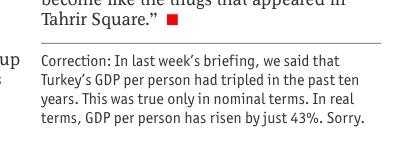
A ubiquitous talking-point in Turkish foreign policy is the claim that, under AKP rule, the country’s GDP has tripled. This, however, is a misleading number as it relies on valuing US dollars of Turkey’s GDP at current prices, thus pooling both inflation of the dollar and the real appreciation of the Turkish lira on top of real growth. In real terms, Turkish GDP at constant prices grew by 64 percent between 2002-2012, and GDP per capita grew by 43 percent. A decent growth rate, but nowhere near the miraculous. Continue reading

Swedish Democracy Promotion in Turkey

The news coming out of Turkey these days are bleak. Earlier this week, a fifteen-year-old boy, Berkin Elvan, passed away following 269 days in a coma after being hit by a tear gas canister during the Gezi protests last year. Demonstrations in his honor was met by more tear gas, and so far two people are reported dead in clashes between police and protesters.

This is but the latest incident in the country’s political instability which has been going on for years under the surface, only coming out in full view last year. A political civil war is raging between the Prime Minister Erdogan’s ruling AKP and the Gulen movement, a conflict between powerful former allies over the control of the country’s overpowered state institutions. Disagreements over policy in Syria, Israel, EU, appointments in top intelligence positions, as well as executive succession are the symptoms of this conflict. The underlying rationale is consolidating the power vacuum left by the old secular elite, many of which now linger in jail after a set of  controversial trials. In both the Ergenekon and Sledgehammer trials, suspects were accused and later convicted to harsh sentences for on multiple occasions attempting to overthrow the AKP government. When these trials were ongoing, Erdogan, the AKP and Gulenist media outlets, such as Zaman and its English version Today’s Zaman, both proclaimed them as the harbingers of democracy.

Today, the tables have turned, and Erdogan now claim these trials to be a fraud and point to followers of the Gülen movement in the judiciary and police as the main culprits of the judicial abuse (here). Although this smacks of political expediency – Erdogan and the AKP have likely been well aware of what’s been going on – it has increasingly become obvious that the trials were often based on fraudulent evidence and conducted with severe judicial impropriety. In the ongoing conflict with the Gulen movement, the government has reassigned thousands of police officers, prosecutors, and judges and new laws have further concentrated the governments hold over the judiciary. Media censorship has also expanded with new laws to monitor internet activity and threats to ban social media sites for incriminating voice recordings of top officials. But just as important as the recent erosion of democratic institutions are the reforms that never came about under AKP’s more than a decade long rule. The way I see it Turkey is plagued by three fundamental institutional deficits Continue reading

Dear Editors – OR – Turkey and some unhelpful shades of puffery

As a regular reader of op-eds and other articles on Turkey, it’s recently come to my attention how unhelpful many opinion articles are for the purpose of understanding what’s really going on in the country.

There’s plenty of good journalists writing about Turkey, so my point here is not about Turkey coverage in the media overall (which would require at least one post of its own), but about the op-eds, the commentators. I think it’s great that so many articles are being written about Turkey, as there’s so much in the country’s experience that can teach outsiders (especially us poleconomists and polisciers) how political conflict and institutions interact.

The problem (and I think it’s a problem) is not necessarily that editors at mainstream outlets such as the Financial Times or Project Syndicate include partisan articles – either clearly pro-AKP or clearly pro-Gulen (and I’m referring to AKP here as a post-Dec-17 party) – at the expense of articles that provide opinion without feeling like you’re reading something from Pravda. No, the problem is that they’re bad articles, even as the partisan puffed-up ones they appear to be.

Interestingly, just as the AKP and the Gülen movement are entirely different organizations, their puff pieces also exhibit very different kinds of authors. Whereas the former kind is much likely be authored by an actual member of the AKP (or rather, a PR firm ghost-writing it for them) the latter is more likely to be authored by someone who is not formally (if there is such a thing) a member.

As examples of pro-AKP puff pieces, prime examples are: Continue reading

My Inner Skeptic and Cynic on Recent US commentary on Turkey

The US foreign policy community has been making quite a few waves on Turkey lately. Barely a month ago, two former US ambassadors to Turkey wrote a scathing op-ed in Washington Post criticizing Erdogan and the AKP in its civil war with former allies in the Gulen movement. Yesterday, a who’s-who of the US foreign policy community wrote an open letter to Barack Obama claiming Erdogan is “subverting Turkey’s political institutions and values and endangering the U.S.-Turkey relationship.”

It’s certainly a good thing that influential policy leaders are aware of the real risk that Turkey’s fragile democracy could erode into an authoritarian one-party state. But the Skeptic in me feels these interventions lack a crucial component. Dani Rodrik voiced this in what I think is probably the best paragraph I read on Turkey this week:

We cannot look at all this and focus only on what Erdogan is doing without at least acknowledging that the Gulenists also bear considerable responsibility for bringing the country to its current crisis. The idea that there was something like the rule of law or Turkey was democratizing before Erdogan began to tighten the screws on the Gulen movement is dangerous nonsense. Those who call on Erdogan to respect democracy and the rule of law should be calling on the Gulen movement to do the same. Otherwise, they end up taking sides in a war in which neither side looks pretty.

It’s hard to keep a straight face reading some of the above linked interventions. One wonders where these concern were during the height of the Ergenekon, Sledgehammer trials, and KCK trials, which are only the most recent of Turkey’s long list of tainted political trials. I don’t remember seeing any concerns voiced after the Roboski massacre, when fighter jets bombed 40 (mostly-teenager) Kurdish villagers crossing the Iraq.

In regards to this, my inner Cynic is quite informative. In addition to noting that Kurdish villagers do not give a lot of political donations to US politicians, moreover the the apparent shift in many US policymakers’ views on Turkey may not be about its quality of democracy at all (perhaps it should, though).

Instead, as Michael Koplow explains in a recent Foreign Affairs article, the US has been getting increasingly annoyed with Turkey’s government for a host of other (not necessarily related to the quality of democracy) events. You should read the whole article but among a few key points that likely underlie the likely end of the US-Turkey “model relationship” are: Continue reading

Radical Political Islam and the Empowerment of the Poor and Pious

I have a paper coming out in Econometrica this month (ungated version here) on how local Islamist mayors increased female participation in education in Turkey during the 1990s. The main contribution of the article is that it uses a method called the Regression Discontinuity Design (RDD) which allows identifying an estimate of the causal effect of having Islamist political control.

A focus on causality is important as the reason why Islamist-controlled constituencies have poor women’s rights may come from voter-specific characteristics, like preferences for political Islam, as much as the effect of the Islamist politician itself. If politicians have little power to influence policy other than adopting the policy position of a representative (often the median) voter, then (Islamic) party identity doesn’t matter for policy, only voter preferences do. Resulting policies may be detrimental to development, but is then the result of voter preferences, not politicians. If for some reason, elected politicians can influence policy away from the representative voter to their own preferred position, then politician identity will matter for policy. In this case, unwanted policies may be as much the fault of the politician (see this paper for more through discussion). Continue reading

Remembering Gezi

2013-06-04 11.34.52

I meet “Zeki” in a bar in central Beyoğlu. He’s around thirty. His eyes and face are all red, and when he speaks he sounds like one of those in-movie mob bosses on life support. He tells me all this is due to his participation in four nights of riots around Taksim Square and in the Beşiktaş quarters, his visible medical symptoms the consequences of breathing in and just being around pepper- and tear gas. Despite this, he tells me, he only needed to visit the hospital once, which happened to be the night before I ran into him.

During a tense clash with the police  in Beşiktaş the night before, a female friend of his faints,  as much out of exhaustion as the tear gas. Without thinking, Zeki picks her up and starts to walk away from the police and the fighting. At that point, he his by a plastic bullet in his rear end. The reason for this brief hospitalization is thus “plastic bullet in the butt.” It could be worse, of course, but at that moment in the bar, it couldn’t be more funny.

After we stop laughing at this, he tells me more about himself. Zekis has an M.A. from UC San Diego, an uncle in Reykjavik, and works as a stock broker in Istanbul’s financial district. In the last election, he voted for Erdoğan and the AK party. He’s thus not your average protester. And Gezi isn’t your average protests.

This is from my notes, written while visiting Istanbul during the Gezi protests last summer. The reason why I was looking through them again was this week’s start of the court case against the police officers allegedly behind the death of Ali Ismail Korkmaz. Seeing the picture of Ali Ismail’s mother sitting with his picture in her lap, it hit me that it’s been more than half a year since the Gezi protests shook Turkey. Since then any illusion of political instability in one of the US (and Sweden’s) key allies in the region has been shattered. Continue reading